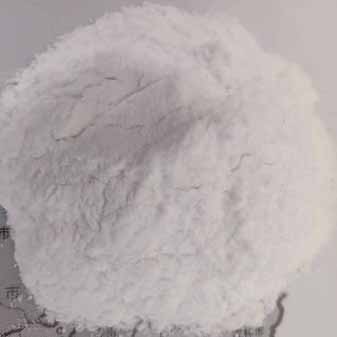
Potassium comes in two commercial forms. Muriate of potash is cheaper per unit of potassium and does the job in most broadacre situations. Sulphate of potash costs considerably more but is the only sensible choice in some crops. Knowing which situation you are in is worth real money either way.
The comparison
| SOP (sulphate of potash) | MOP (muriate of potash) | |
|---|---|---|
| Chemical name | Potassium sulphate | Potassium chloride |
| Analysis | 0-0-50 | 0-0-60 |
| Potash per tonne | 500 kg | 600 kg |
| Sulphur | ~17–18% | None |
| Chloride | Negligible | ~46% |
| Salt index | Low | High |
| Relative cost | Higher | Lower |
View our sulphate of potash 0-0-50
Chloride is the whole argument
MOP is 46% chloride. In most broadacre cropping on soils with reasonable rainfall or irrigation, that chloride leaches and causes no problem — and MOP is the cheaper, sensible choice.
It becomes a problem when:
- The crop is chloride-sensitive. Grapevines, avocados, citrus, stone fruit, potatoes, tobacco and many berries accumulate chloride and show leaf burn, reduced quality or yield loss.
- Soil is already saline or sodic. Adding chloride makes an existing salinity problem worse.
- Rainfall is low and chloride is not leaching out of the root zone between seasons.
- Quality is what you are paid for. In wine grapes, chloride carries through to the finished product and is regulated in some export markets.
The salt index
MOP has a high salt index, meaning it raises the salt concentration of the soil solution more per unit applied. Near germinating seed or on already-saline ground, that draws water away from the plant rather than towards it. SOP’s much lower salt index makes it the safer option for banded placement and for fertigation, where salt concentration in the emitter zone builds up over a season.
The sulphur that comes free
SOP carries around 17–18% sulphur. If your soil test shows a sulphur deficiency as well as a potassium one, SOP addresses both in a single pass — and the value of that sulphur should be subtracted from SOP’s price before you compare it with MOP. It narrows the gap more than most growers expect.
Cost: comparing properly
Compare cost per kilogram of K2O, not per tonne. A tonne of SOP delivers 500 kg of potash; a tonne of MOP delivers 600 kg. Then subtract the value of SOP’s sulphur at whatever a sulphur source costs you.
SOP still comes out dearer in most comparisons. The question is whether the chloride penalty in your crop costs more than the price difference — in a chloride-sensitive perennial crop it usually does, by a wide margin.
Quick answer
| Your situation | Choose |
|---|---|
| Grapes, citrus, avocado, stone fruit, berries | SOP |
| Potatoes and other quality-graded horticulture | SOP |
| Saline or sodic soil | SOP |
| Fertigation and drip systems | SOP |
| Soil short of both potassium and sulphur | SOP |
| Broadacre cereals with adequate leaching rainfall | MOP |
| Cost per unit of potassium is the priority | MOP |
We supply sulphate of potash 0-0-50, and can build it into a blend with the rest of your program. Tell us the crop and the tonnage.
Leave a Reply