
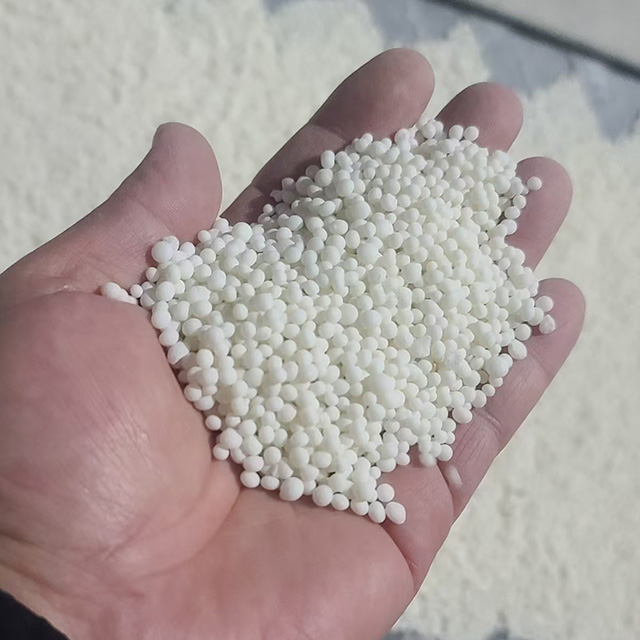
Most growers end up buying the standard grade closest to what their soil test actually asked for. Over a season, across a whole property, that compromise costs money twice — you pay for nutrient you did not need, and you still come up short on the one you did.
Blending to specification removes the compromise. Here is how ordering one actually works.
What you send us
| Information | Why we need it |
|---|---|
| Target analysis, or the soil test | Either works. Send the lab report and we will work back to the analysis |
| Crop and area | Determines whether the ratio makes agronomic sense at the rate you intend |
| Tonnage | Sets price, and whether it is one delivery or staged |
| Delivery address | Freight is quoted per consignment |
| Packing | Bulk, one-tonne bulka bags or bagged |
| Spreader and storage | Affects which granule sizes we build the blend from |
| Date needed | Blends are made to order |
What we blend from
Blends are built from the straights and compounds we carry — urea, ammonium sulphate, calcium ammonium nitrate, DAP, MAP, sulphate of potash, and compound grades from our 130-product range.
What cannot be blended
Not every combination is sound, and a supplier who agrees to anything is not checking. Some combinations react, absorb moisture and cake solid, or separate badly in the spreader. We will tell you before you commit rather than after you have spread it.
Common problems:
- Urea with ammonium nitrate — the mixture becomes hygroscopic and can turn to slurry in the bag
- Urea with superphosphate — moisture is released and the blend cakes
- Badly mismatched granule sizes — segregation in transit and off the spinner, so the analysis you paid for is not what the paddock receives
- Ratios needing more of a nutrient than the source can supply — some targets are simply not physically achievable from solid straights
Where a target cannot be blended safely, we will propose the closest one that can, and tell you what the difference means.
Tonnage, packing and lead time
Minimum order is 10–25 MT, depending on the product and the destination. Blends are available in bulk, one-tonne bulka bags or bagged — and the choice matters more for a blend than for a straight, because packing affects how much handling the blend gets before it reaches the ground.
If you are storing the blend for a while before spreading, tell us. We will build it from closer-matched granules and recommend packing that limits segregation.
How a blend is quoted
The quote sets out the target analysis, the tonnage, the packing, the freight as a separate line, and the lead time. Everything is in writing before you commit — we do not take orders or payment through this website.
Payment is by bank transfer: EFT within Australia, or T/T for export.
Is a blend actually cheaper?
Often, yes — but not always for the reason people expect. The saving usually comes from not over-applying rather than from a lower price per tonne. If the nearest standard grade forces you to apply 30% more phosphorus than the soil test called for in order to get enough nitrogen, you are paying for phosphorus you did not need across every hectare.
Work it out on cost per unit of the nutrient you actually require, and compare that to the standard grade including whatever it over-supplies.
Tell us the ratio, the tonnage and the delivery address. We will confirm it blends, then quote it in writing.
Leave a Reply