
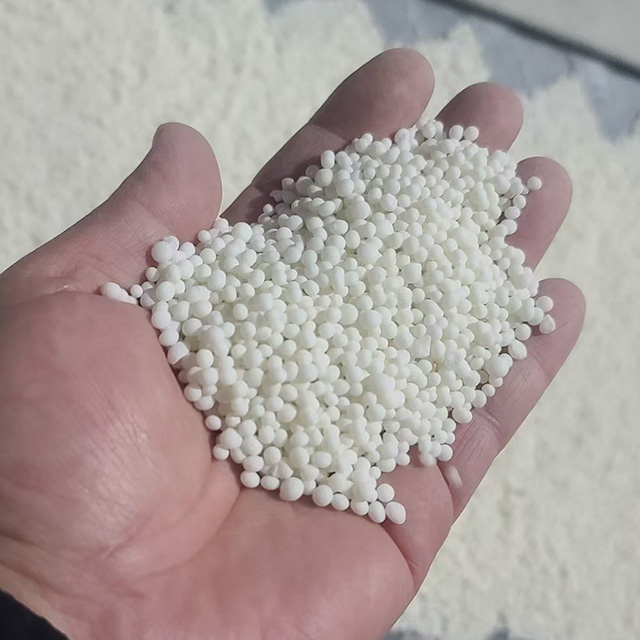
DAP and MAP are the two phosphate fertilisers most Australian growers actually choose between. They look similar in the bag and are often priced within a few dollars of each other, but they behave differently in the seed zone and that difference decides which one belongs in your paddock.
The analyses
| DAP | MAP | |
|---|---|---|
| Full name | Diammonium phosphate | Monoammonium phosphate |
| Analysis | 18-46-0 | 10-52-0 to 12-61-0 |
| Nitrogen per tonne | 180 kg | 100–120 kg |
| Phosphate per tonne | 460 kg | 520–610 kg |
| Reaction near the granule | Alkaline (pH ~7.8–8.2) | Acidic (pH ~3.5–4.5) |
| Free ammonia risk | Higher | Low |
The difference that actually matters: seed safety
DAP produces an alkaline reaction as it dissolves, and in that brief high-pH zone some of the ammonium converts to free ammonia. Ammonia is toxic to germinating seed. Placed too close to the seed, at too high a rate, in dry soil, DAP can reduce establishment.
MAP dissolves to an acidic reaction and produces very little free ammonia, which makes it the safer choice for placement close to or with the seed.
The risk with DAP rises when:
- Soil is dry, so the ammonia is not diluted or moved away
- Soil is sandy, with low buffering capacity
- Row spacing is wide, concentrating the fertiliser band
- Rates are high and the fertiliser sits in direct seed contact
- The crop is sensitive — canola and legumes are less tolerant than cereals
Soil pH: which suits your ground
On alkaline and calcareous soils, phosphorus availability is already the problem — it locks up as calcium phosphates. MAP’s acidic reaction zone briefly lowers pH around the granule and can improve early phosphorus uptake. Much of South Australia falls into this category.
On acidic soils, DAP’s alkaline reaction is not a disadvantage and its extra nitrogen is useful. If you are already applying lime, DAP is generally the more economical choice.
Working out which is cheaper
Do not compare price per tonne. Compare price per unit of phosphorus, then credit the nitrogen.
The method
- Divide the tonne price by the phosphate content to get cost per kg of P2O5
- DAP carries 80 kg/t more nitrogen than MAP — value that at your urea price and subtract it
- Compare what is left
Worked through, DAP often comes out slightly ahead on cost per unit of phosphorus once the nitrogen is credited. Whether that saving is worth the seed-safety trade-off depends entirely on your soil, your crop and your seeding setup.
Quick answer
| Your situation | Choose |
|---|---|
| Fertiliser placed with or very close to the seed | MAP |
| Alkaline or calcareous soil | MAP |
| Dry seeding conditions | MAP |
| Canola, lupins or other sensitive crops | MAP |
| Banded away from the seed, adequate moisture | DAP |
| Acidic soil, and you want the extra nitrogen | DAP |
| Cost per unit of phosphorus is the priority | DAP, usually |
Send us your soil test and your seeding setup. We will tell you which of the two suits, and quote it delivered.
Leave a Reply