
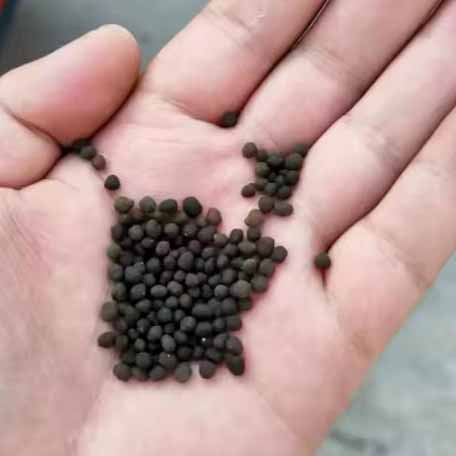

Description
Diammonium phosphate (DAP) 18-46-0 carries 460 kg of phosphate (P2O5) and 180 kg of nitrogen in every tonne — the highest-analysis nitrogen-and-phosphorus fertiliser in common use, and the standard starter across Australian cropping.
Phosphorus is the nutrient a young plant cannot do without and cannot go looking for, which is why almost every sowing programme is built around a product like this one. Supplied granular, in bulk, bulka bags or bagged from 10 MT, delivered Australia-wide and shipped worldwide, with a Certificate of Analysis and Safety Data Sheet against the batch supplied.
Diammonium Phosphate 18-46-0 Specification
The most widely used high-analysis phosphate starter fertiliser in Australia. The declared analysis and supply detail for Diammonium Phosphate 18-46-0 are set out below. A Certificate of Analysis is issued on request against the batch you actually receive.
| Product name | Diammonium Phosphate 18-46-0 |
| Product code | DIAMMONIUM-PHOSPHATE-18-46-0 |
| Product family | Diammonium Phosphate(DAP) |
| Declared analysis (N–P–K) | 18–46–0 |
| Total nitrogen (N) | 18% |
| Phosphorus (as P2O5) | 46% |
| Potassium (as K2O) | 0% |
| Total nutrient content | 64% (64 units) |
| Elemental phosphorus (P) | 20.1% |
| Elemental potassium (K) | 0% |
| Nutrient supplied per tonne | 180 kg N · 460 kg P2O5 · 0 kg K2O |
| Physical form | Granular |
| Water solubility | Soil-applied granular product |
| Packaging | Bulk, one-tonne bulka bag or bagged — confirmed on your quotation |
| Minimum order | 10 – 25 MT, depending on the product and the destination — confirmed on your quotation |
| Availability | Australia-wide delivery; international shipping on request |
| Certificate of Analysis | Issued on request against your delivered batch |
| Safety Data Sheet | Available on request — request it before handling |
Nutrient Content of Diammonium Phosphate 18-46-0
One tonne of Diammonium Phosphate 18-46-0 supplies 180 kg of nitrogen (N), 460 kg of phosphate (P2O5) and 0 kg of potash (K2O) — a total of 64 nutrient units per 100 kg.
Nutrient supplied at different rates
What one hectare actually receives at a given spreading rate of Diammonium Phosphate 18-46-0. Use it to work back from a nutrient target to a product rate.
| Rate applied | Nitrogen (N) | Phosphate (P2O5) | Potash (K2O) |
|---|---|---|---|
| 50 kg/ha | 9 kg | 23 kg | 0 kg |
| 100 kg/ha | 18 kg | 46 kg | 0 kg |
| 150 kg/ha | 27 kg | 69 kg | 0 kg |
| 200 kg/ha | 36 kg | 92 kg | 0 kg |
| 250 kg/ha | 45 kg | 115 kg | 0 kg |
| 300 kg/ha | 54 kg | 138 kg | 0 kg |
Indicative conversion only. Set application rates against a current soil test and confirm them with a qualified agronomist.
Where DAP 18-46-0 Is Used
DAP goes in at sowing, with or beside the seed, where the phosphorus can reach a root system that has barely started.
Cereals at sowing
Wheat, barley and oats, drilled with the seed or banded below it. The nitrogen in DAP is a useful starter charge, but it is not a substitute for the main nitrogen application — that comes later as urea or another topdressing.
Canola and pulses
Both respond strongly to phosphorus at establishment, and both have small seeds that are easily damaged by fertiliser placed in direct contact. Band it away from the seed.
Pasture establishment and renovation
New pasture has the same problem as a new crop: no root system yet, and phosphorus that will not travel to find it. A phosphorus-led starter at sowing pays for itself in establishment.
As the phosphorus base of a blend
DAP is the usual starting point when a soil test calls for phosphorus plus potassium or sulphur. Tell us the analysis you need and we will blend to it.
Phosphorus Does Not Move — So Placement Decides Everything
Nitrogen washes down through the profile with rain. Phosphorus does not. It binds to soil particles within centimetres of where it lands and stays there, which has two consequences worth more than any other advice on this page.
- Broadcasting phosphorus onto the surface of an established crop achieves very little. The roots are below it and the phosphorus will not come down to them. Phosphorus decisions are made at sowing, not in season.
- Placement beats rate. A modest amount banded where the young roots will find it does more than a larger amount spread where they will not.
DAP or MAP?
They are close relatives and either will feed a crop. The difference that matters is what happens in the soil immediately around the granule.
| DAP 18-46-0 | MAP | |
|---|---|---|
| Phosphate | 46% P2O5 | Higher |
| Nitrogen | 18% | Lower |
| Around the granule | Alkaline as it dissolves | Slightly acidic as it dissolves |
| Suits | Acidic and neutral soils; where the extra starter nitrogen is wanted | Alkaline soils; placement close to sensitive seed |
See monoammonium phosphate, or send us the soil test and we will match a product to it.
Packing and Quantities
Diammonium Phosphate 18-46-0 is supplied in bulk, in 1,000 kg and 500 kg bulka bags, and in 50 kg and 25 kg bags. Minimum order is 10–25 MT, depending on the product and the destination. Packing formats, 20ft container loading figures, and bagging and marking are set out in full on our Delivery & Freight page.
Handling and Storage
Store Diammonium Phosphate 18-46-0 dry, off the ground and out of direct weather. Nitrogen and ammonium-based fertilisers draw moisture from the air and will cake if left exposed — full handling and storage guidance is on the Delivery & Freight page.
DAP 18-46-0 — Common Questions
How much phosphorus is in a tonne of DAP?
460 kg of phosphate as P2O5, plus 180 kg of nitrogen. At 100 kg per hectare that is 46 kg of P2O5 and 18 kg of N per hectare.
Can DAP go in with the seed?
At low rates on robust, larger seed, commonly yes. At high rates, or with small seed such as canola or clover, no — band it beside or below instead. The ammonia released as DAP dissolves is what causes the damage.
Does DAP supply sulphur?
No. DAP is nitrogen and phosphorus only. Where the soil test shows sulphur short as well, either blend it with ammonium sulphate or use a sulphur-fortified analysis.
Is DAP the same as superphosphate?
No. Single superphosphate is a much lower analysis — far less phosphorus per tonne, so far more freight and spreading per unit of nutrient — though it does carry sulphur and calcium. DAP is the concentrated option.
How should DAP be stored?
Dry and off the ground, bags closed until use. Full handling and storage guidance is on our Delivery & Freight page.
Diammonium Phosphate 18-46-0 Data Sheet
A Certificate of Analysis for your delivered batch and the Safety Data Sheet are both available on request. The analysis in the data sheet is the nominal specification; where a Certificate of Analysis is issued for a batch, that certificate governs.
Related Reading
- Buy DAP Fertiliser in Australia: Supply and DeliveryBuying DAP 18-46-0 in Australia – what the analysis delivers per hectare, what to check…
- DAP vs MAP: Which Phosphate Fertiliser Should You Buy?DAP vs MAP compared – analysis, seed safety, soil pH effects and cost per unit of…
- Fertiliser for Wheat in Australia: Choosing an AnalysisChoosing a fertiliser analysis for wheat in Australia – phosphorus at seeding, nitrogen…
Enquire About Diammonium Phosphate 18-46-0
We do not sell online and take no payment through this website. Tell us the tonnage, the packing format and the delivery address, and we will send you a written quotation covering product and freight.
Reviews
There are no reviews yet.